Touching Glaciers
The retreat of glaciers is one of the most visible signs of climate change. State-of-the-art instruments and vivid models illustrate how this retreat is measured and what the future holds for Switzerland’s glaciers.
Glacier retreat is a hot topic; every year, we read the latest figures on the retreat of Swiss glaciers. But where do these figures come from, and how is glacier retreat measured? To quantify current changes and future trends, we must measure, understand, and model glaciers.
Measuring Glaciers (Mass Balance)
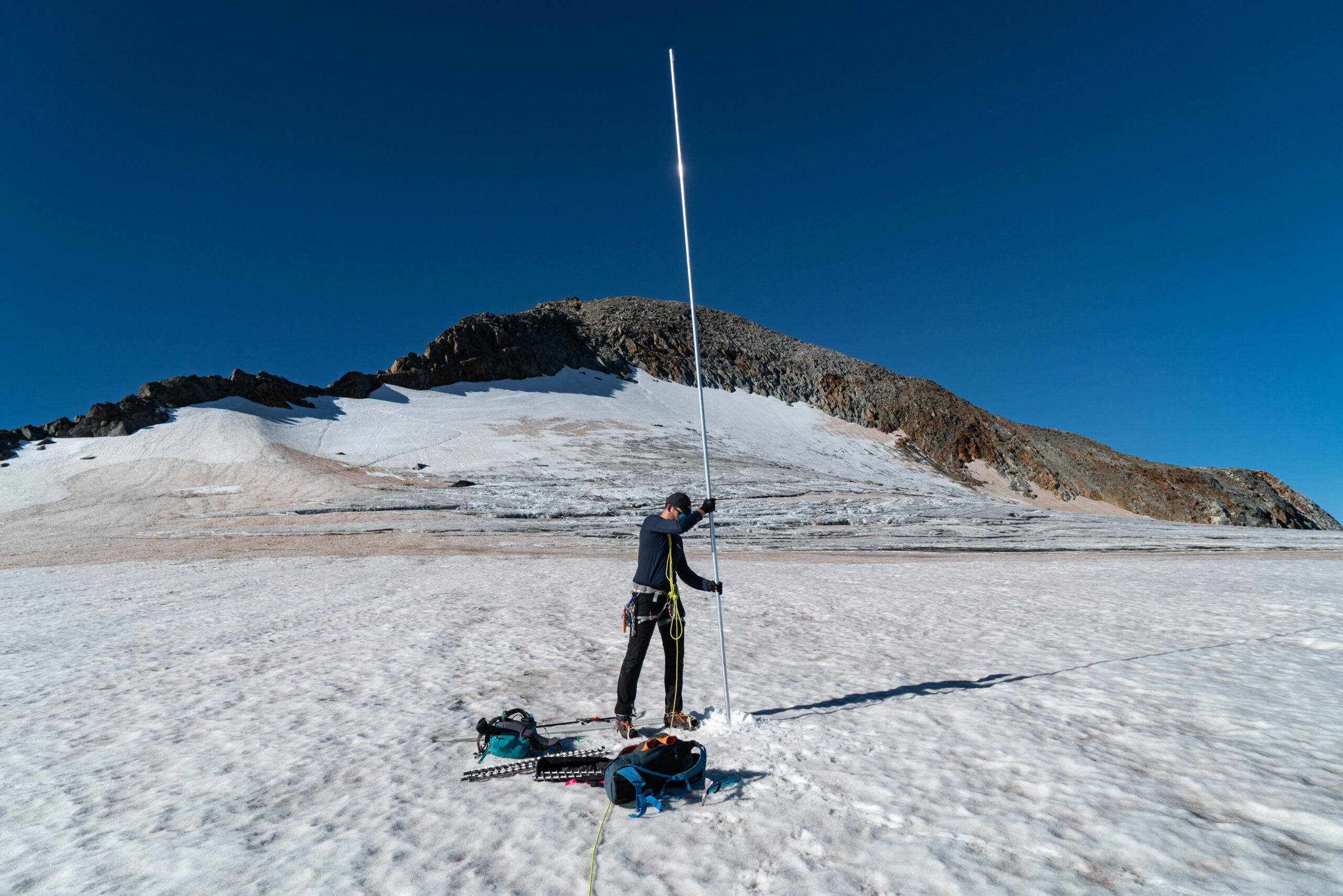
How are Swiss glaciers changing? The “mass balance” is fundamental to determining a glacier’s change. It indicates how the mass (i.e., snow and ice) of a glacier changes over time. We’ll introduce you to the principle of mass balance and the instruments we use to measure it.
Measuring Glaciers (Ice Thickness)
How large are Switzerland’s ice reserves? To answer this question, we must measure the ice thickness of glaciers. This is done, for example, using a radar that can “see” through the ice. With our 3D model, you can literally feel the glacier and the landscape hidden beneath it.
Understanding Glaciers
How does a glacier “work”? To assess the condition of glaciers and the changes they’re undergoing, we need to understand them. Glacier flow is a key process in this context. At our booth, you can observe this flow with your own eyes in a model.
Modeling Glaciers
What does the future hold for our glaciers? Using measurements of glacial change and our understanding of how a glacier “works,” we can now model the future development of Switzerland’s glaciers. At an interactive station, you can see the future and experience how Switzerland’s glaciers will evolve under different climate scenarios.